A Global Expansion Strategy for The RealReal into Paris
OVERVIEW
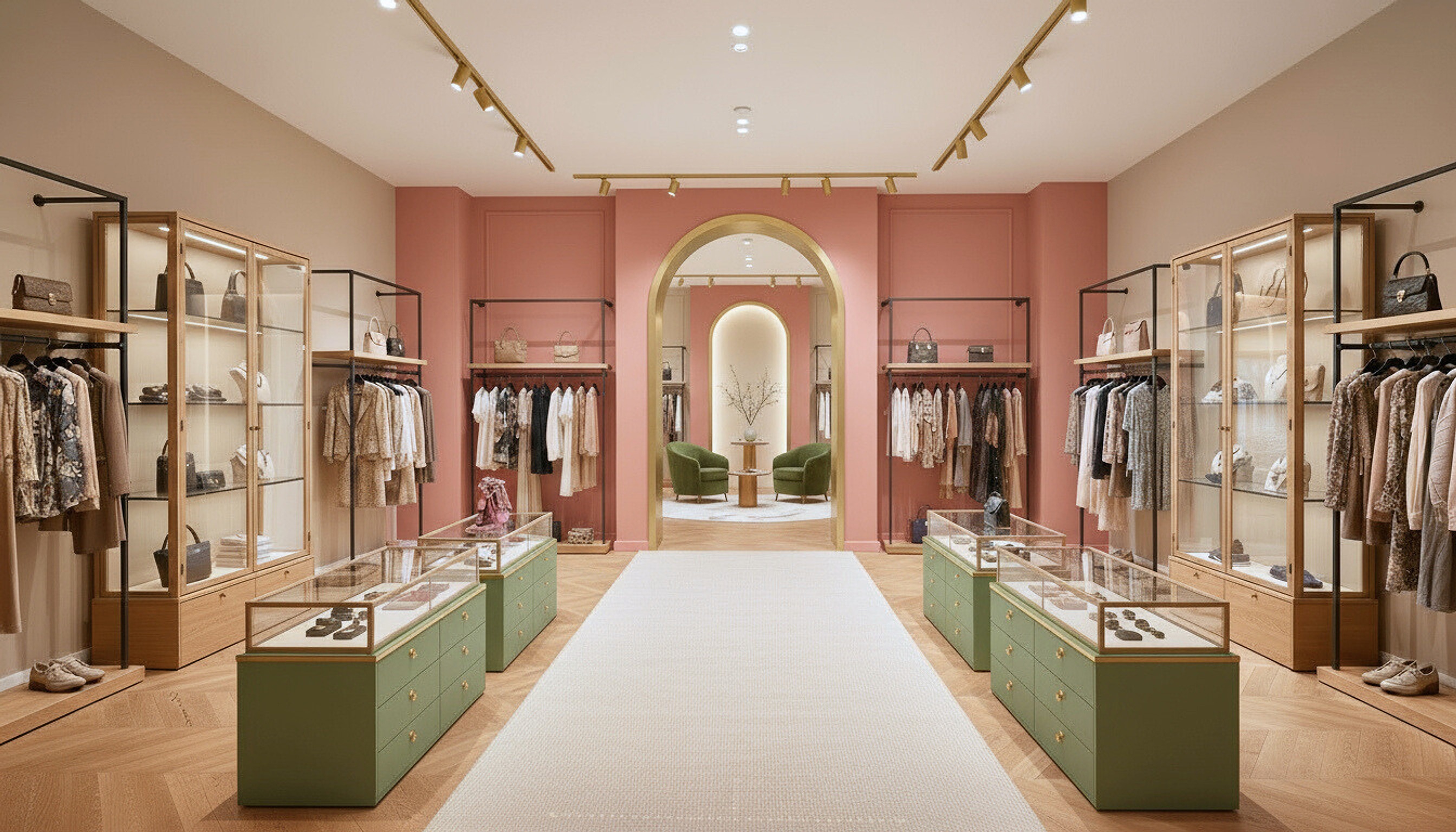
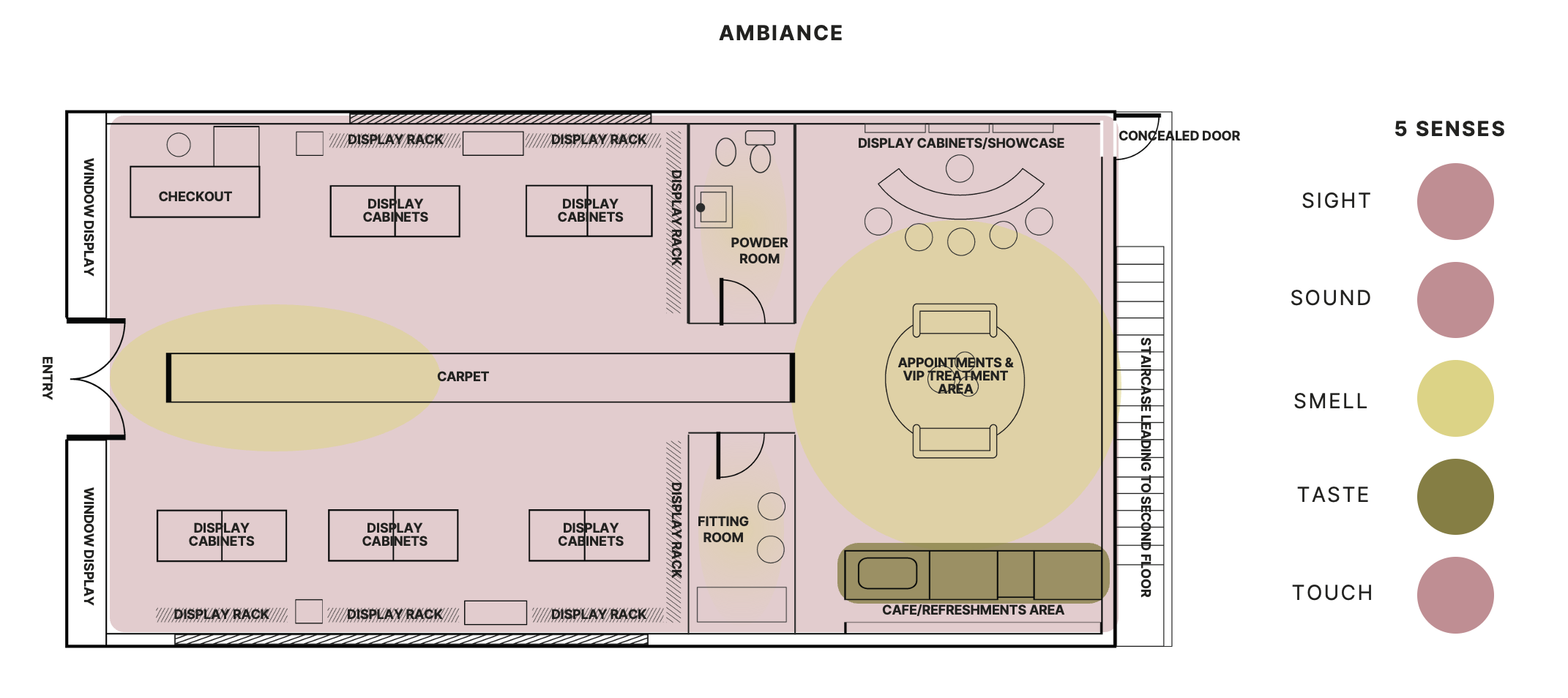
A 3,600 sq ft boutique and café in Le Marais, Paris — The RealReal's first European flagship, positioned as an immersive community destination rather than a resale store.
Developed in SCAD's LXMT 745 Global Distribution for Luxury Brands studio under Professor Michelle Ryan with Caroline Bardwell, Nimrata Singh, and Sanjana Sainath Rao.
CONCEPT
Three pillars set the brief before the building. The boutique had to be highly curated — a Paris assortment, not a translated catalog. It had to be experience-driven — staff, scent, sound, service. And it had to foster connections — a place customers returned to because they wanted to, not because they ran out of something.
PROBLEM
Where should The RealReal go next globally, and how should a first European flagship be built? A full PESTLE analysis made the case for France — one of Europe's largest luxury resale markets (valued at $1.7–2.3B in 2024, growing 10–15% annually) with a population that already embraces pre-owned luxury.
- Competitive field — ReSee and Vestiaire Collective compete on inventory and authentication
- Consumer signal — 70% of French consumers open to pre-owned luxury
- Cultural fit — circularity and eco-design are national priorities
- The differentiator couldn't be the product. It had to be the experience built around it.
DECISIONS
Every decision below fed a single thesis: resale is a commodity, community is not. The flagship was built on the one thing no marketplace app could replicate — a room Parisian customers would want to come back to.
Location — 47 Rue des Francs Bourgeois, Le Marais
The cultural and fashion heart of Paris. A 3,600 sq ft building over two floors — 1,800 sq ft retail + café on ground, 1,800 sq ft authentication and inventory upstairs. Authentication credibility in the same building the customer walks into.
Café as community anchor
Not an amenity — a reason to return. The café inserts a social layer into the retail experience so the boutique functions as destination rather than transaction.
Curated, Paris-specific assortment
Not imported wholesale. Selected against four customer personas — Value-Driven Buyer, Eco-Conscious Shopper, Curator, Status Seeker — with average baskets modeled from $450 to $2,000.
Trust as architecture
Authentication visible in-building, white-glove services, VIP appointments in a private room — the verification engine made physically legible.
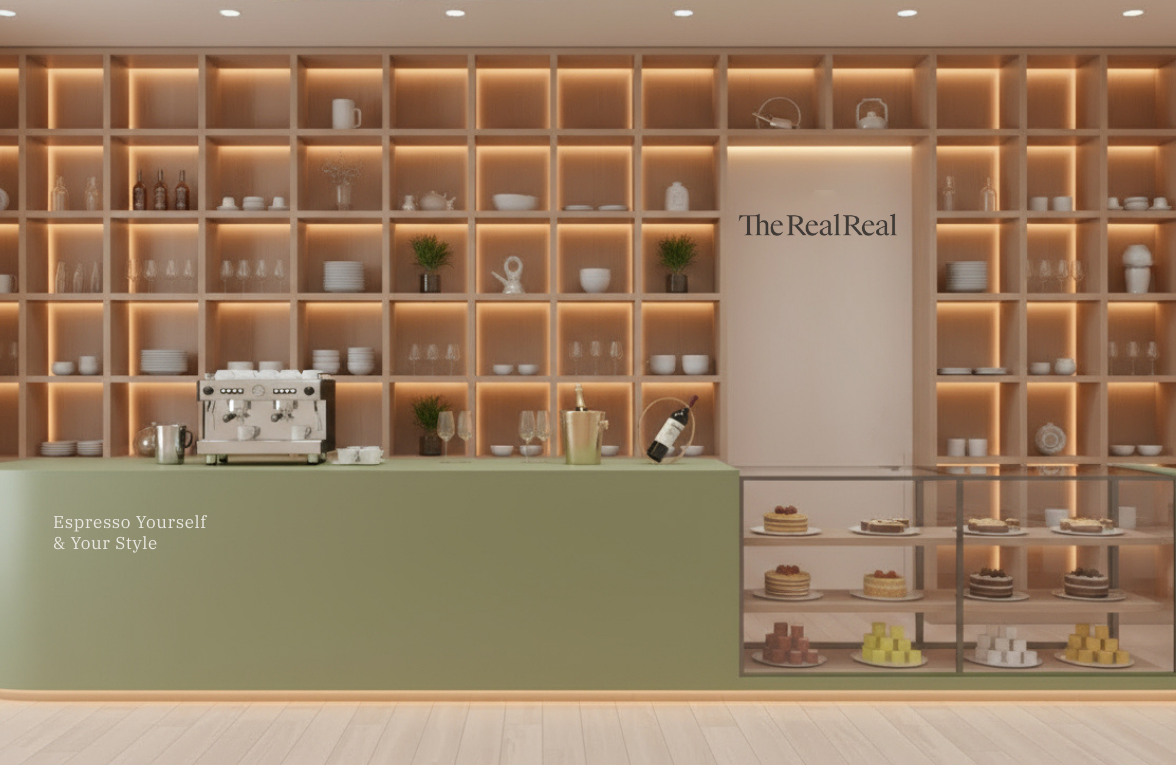
THE CAFÉ
The café isn't an amenity — it's the reason the boutique works as a destination. A coffee bar, communal table, and small-plate menu insert a social layer into the retail floor, turning a 30-minute browse into a two-hour stay and giving Le Marais customers a non-transactional reason to walk through the door.
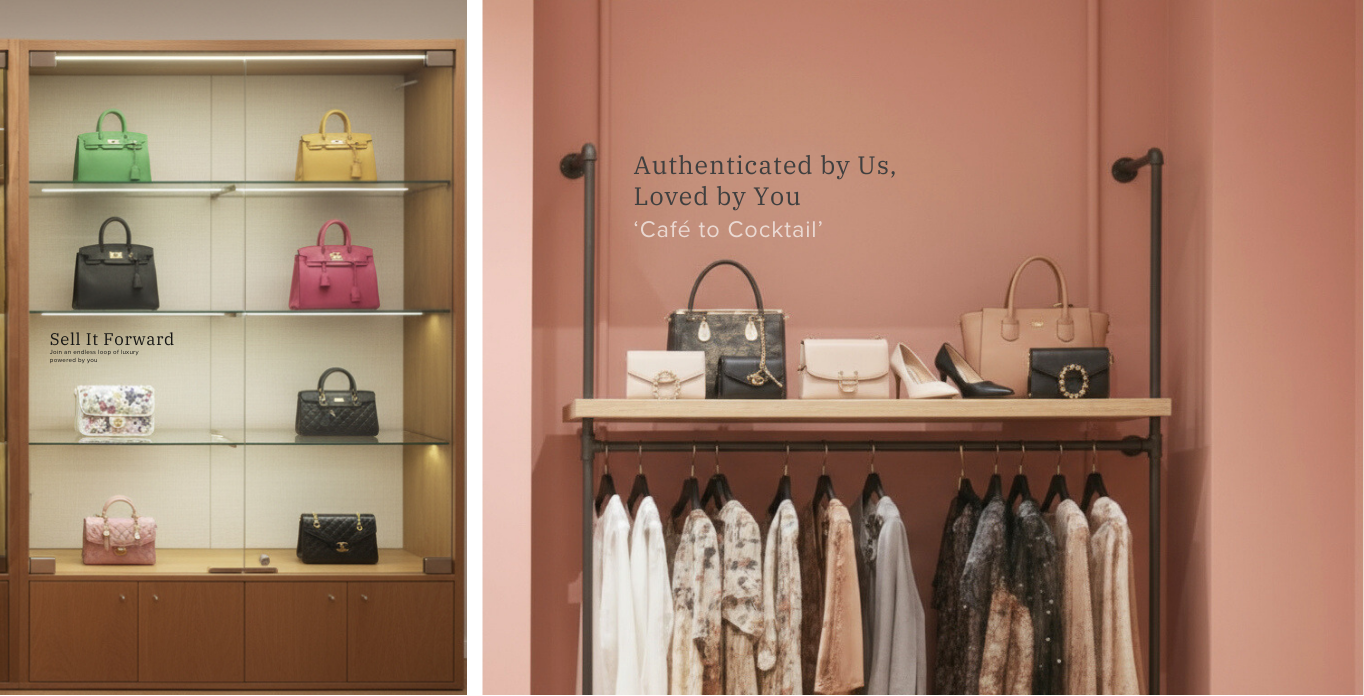
AUTHENTICATION & TRUST
Authentication moved from a back-of-house process to a front-of-house promise. Display walls foreground the categories Paris customers buy first — handbags and outerwear — while in-building authentication and visible craftsmanship bays make the verification engine physically legible. Trust as architecture, not policy.
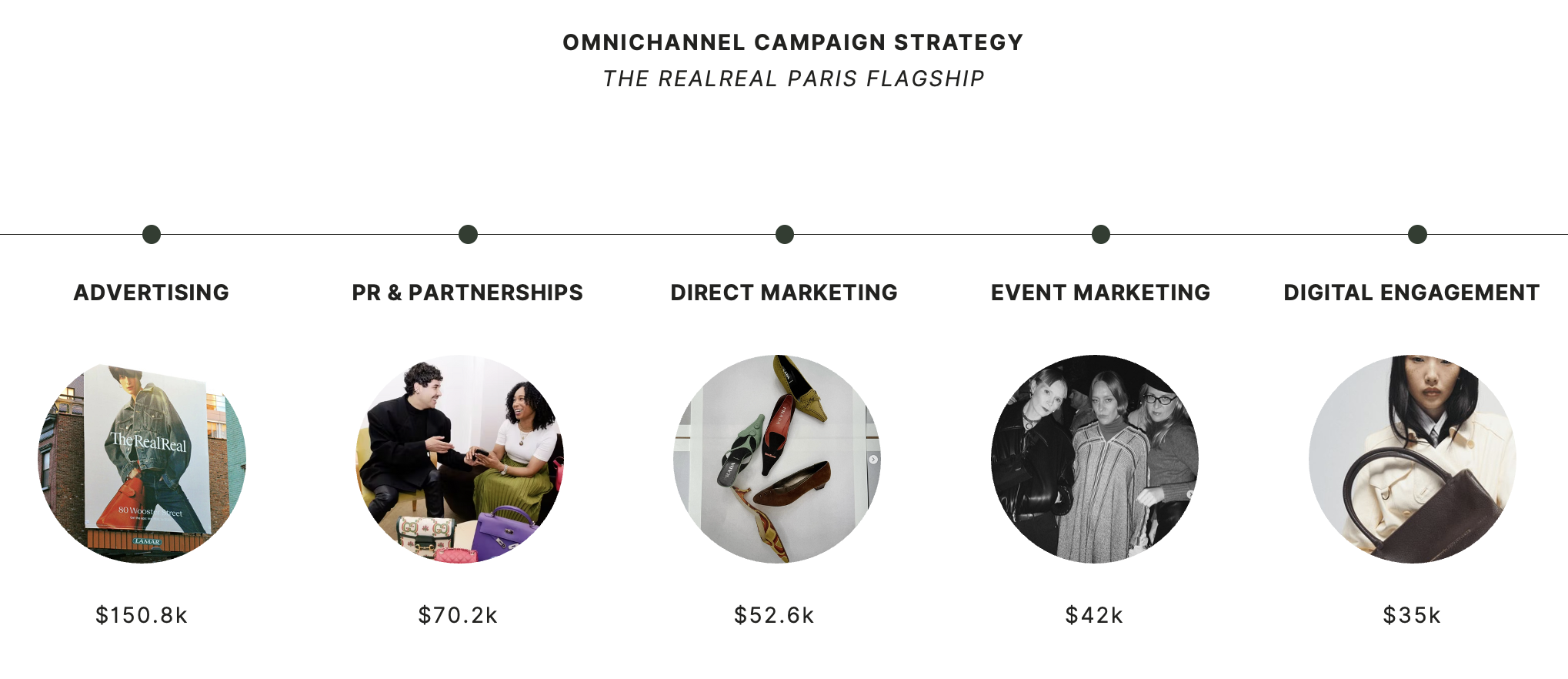
GO-TO-MARKET
A $350,800 marketing budget covered five channels. Advertising and PR partnerships drove launch awareness; direct marketing and event programming carried customer acquisition; digital engagement sustained the calendar through year one. The mix was weighted toward experiences over impressions — Paris customers are reached through the city, not through a feed.
OUTPUT
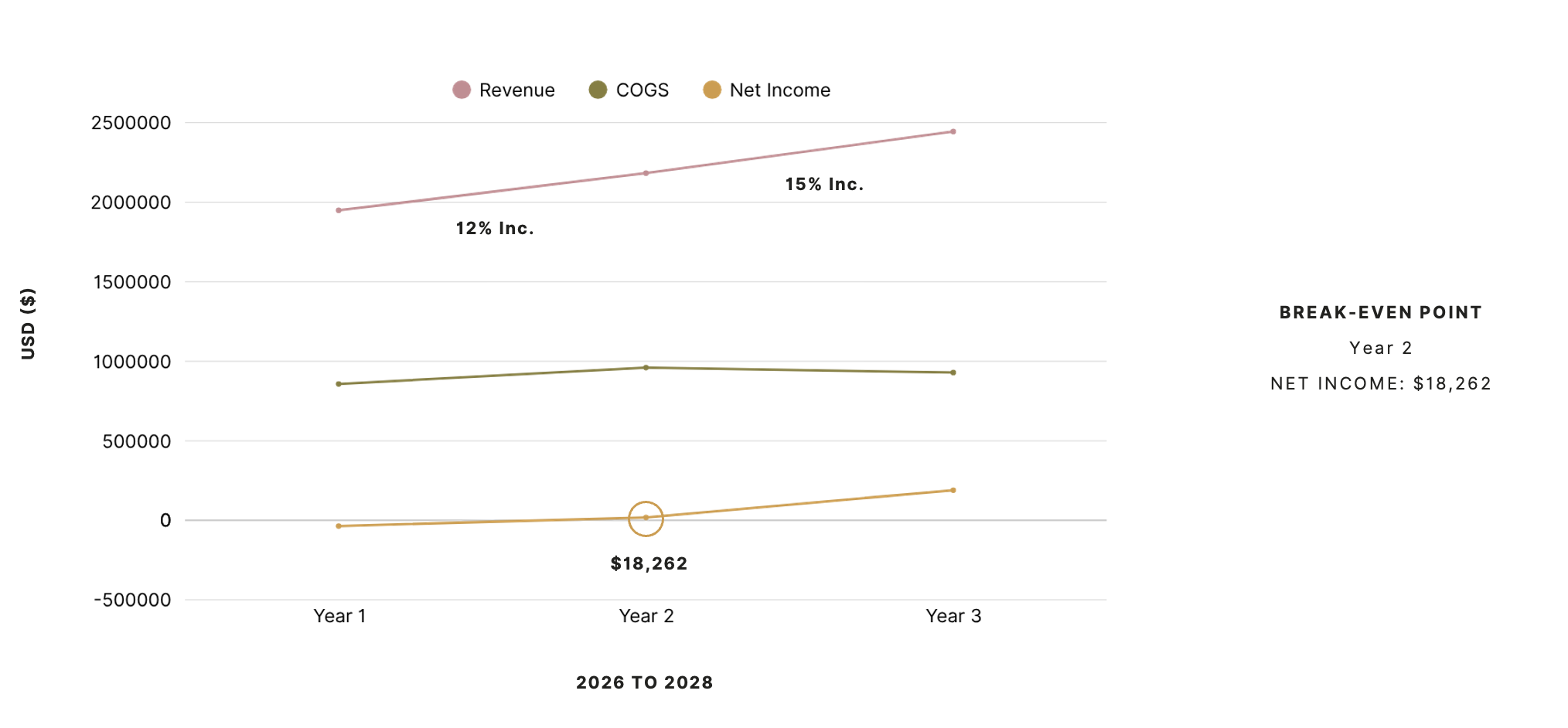
A complete boutique concept — 3D store renders, café design, promotional mockups, and a three-year P&L that sizes the flagship as a viable business. Year 1 projects $1.9M revenue on 56% gross margin; Year 2 is the break-even year; Year 3 hits $189,768 net income at 62% margin.
REFLECTION
Paris held because the city already treats fashion as culture. The boutique is legible to Paris because it is built at the same cadence — curated, editorial, and social by design.