Reimagining Fine Wine Investment as a Fractional, Digital Platform
OVERVIEW
Fine wine is one of the oldest luxury asset classes and one of the least accessible. Historically locked behind brokers, auction houses, and high minimums, it remains a market reserved for collectors and high-net-worth individuals — even as investor interest in alternative assets expands.
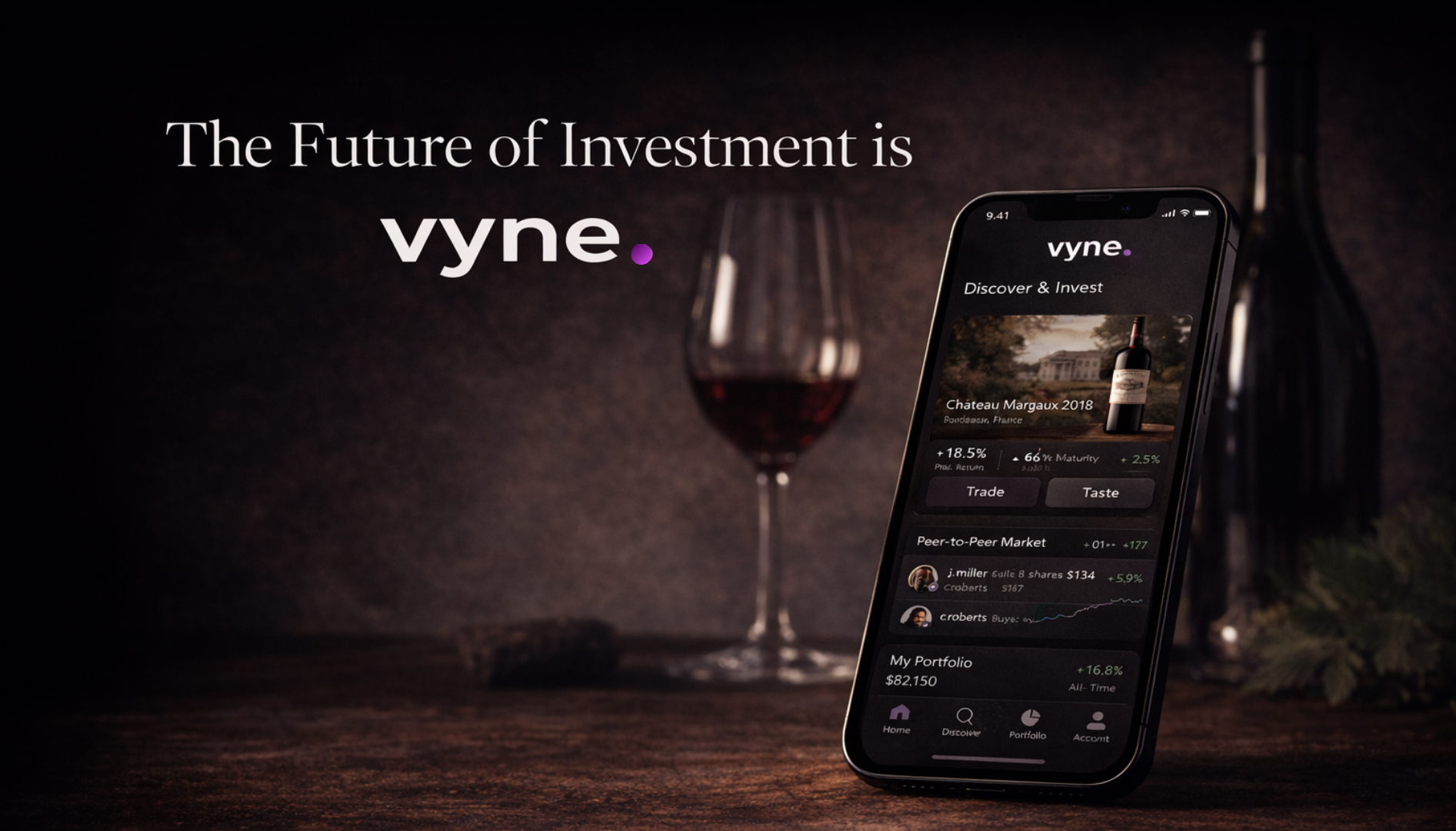
Vyne is a digital investment platform that turns fine wine into a fractional, tradable asset. The brief asked whether a new entrant could take a category defined by scarcity and opacity and make it transparent, liquid, and investable — without losing the cultural weight that makes fine wine worth collecting in the first place.
Developed in SCAD’s LXMT 776 Travel, Hospitality & Luxury Asset studio in Winter 2026 with Sanjana Rao, Anushka Khale, and Taylor Barcus.
THE MARKET
Fine wine has quietly become a compelling alternative investment. Over the past 15–20 years, investment-grade wines have delivered average annual returns of 8–10%, supported by scarcity, consumption-driven supply reduction, and global collector demand. The fine wine investment segment is estimated at $5.5B in 2025, projected to reach $10–12B by 2033.
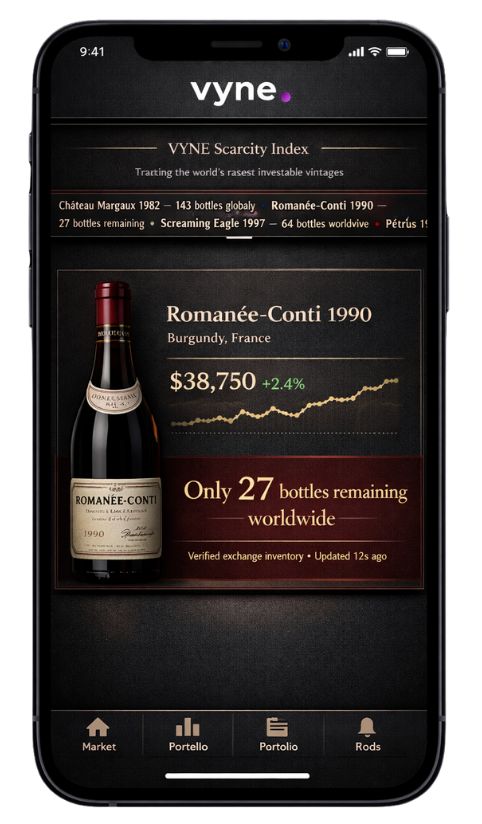
The market has two forces: a slowly modernizing infrastructure (digital platforms, blockchain authentication, bonded storage) and a traditional core that is still broker-led and illiquid. The opportunity lives in the gap — a platform that respects the category’s cultural weight while solving for access.
- Fine wine is 1.5% of global wine volume but ~11% of market value
- Burgundy, Champagne, Tuscany, and Piedmont dominate investment-grade demand
- Existing platforms (Vinovest, WineFi, Cult Wine Investment, Vint) serve the market unevenly — high minimums, limited liquidity, or fund-like exposure without fractional ownership
INTRODUCING VYNE
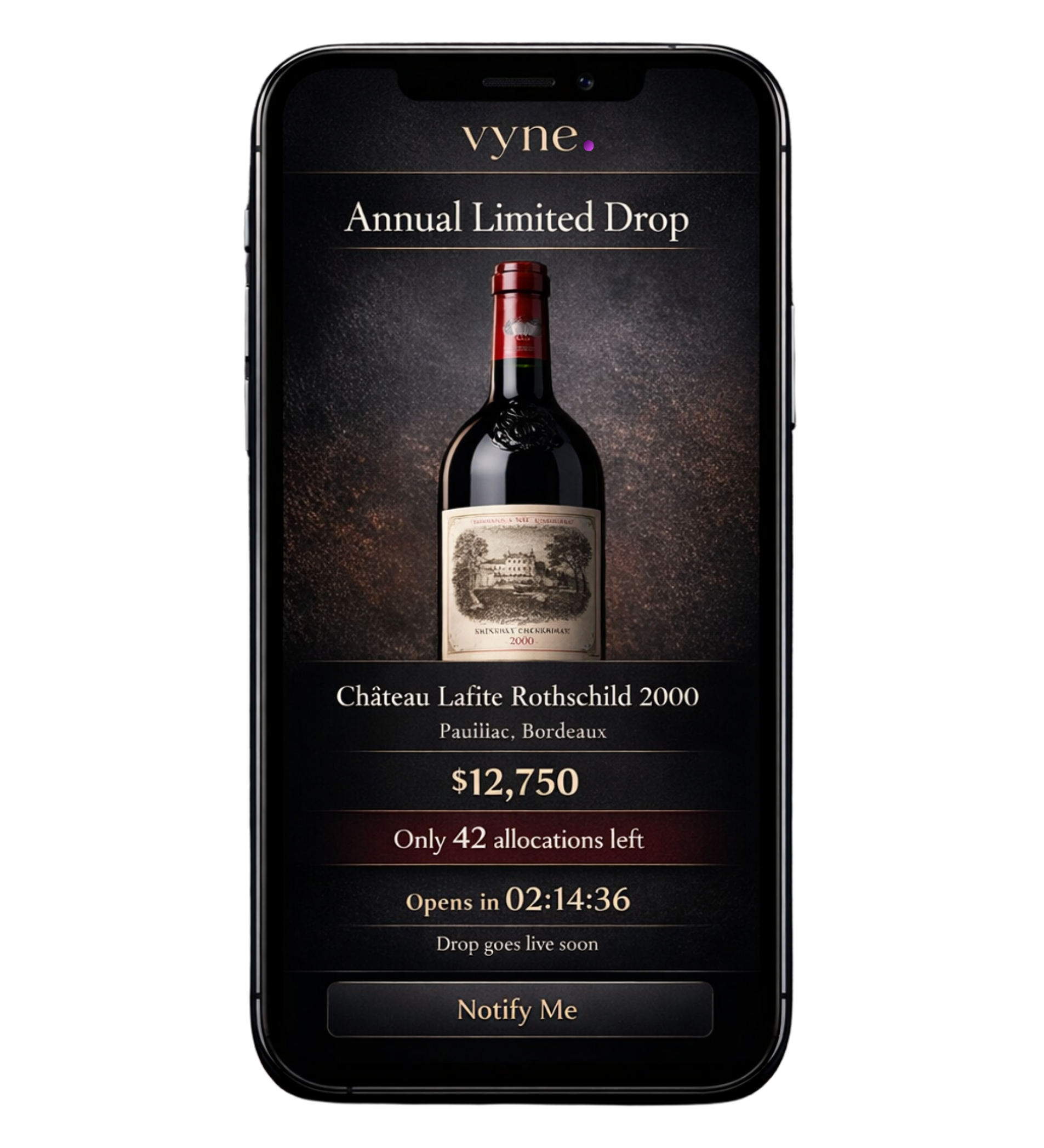
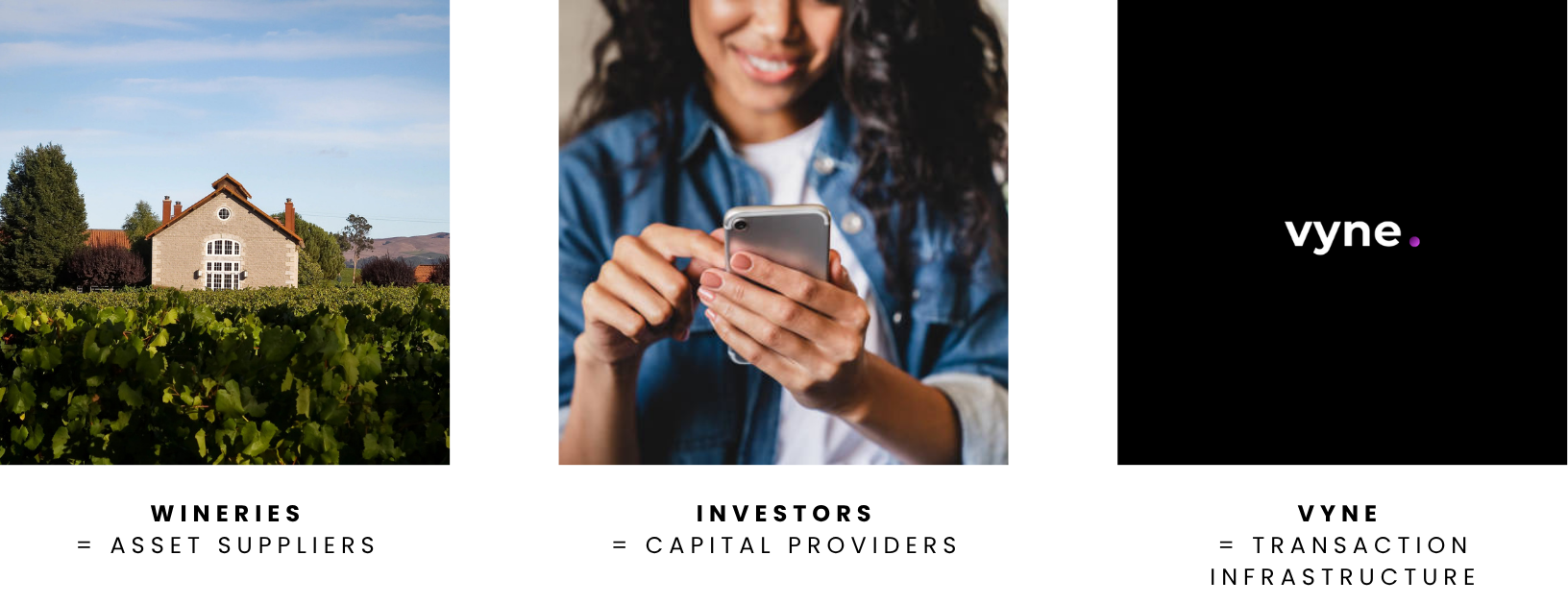
Vyne connects wineries directly with investors through a digital marketplace. Partner wineries allocate a portion of their limited-production wines to the platform while the bottles are still aging. Each bottle is divided into 100 digital tokens that represent fractional ownership, while the physical wine remains in bonded, climate-controlled storage.
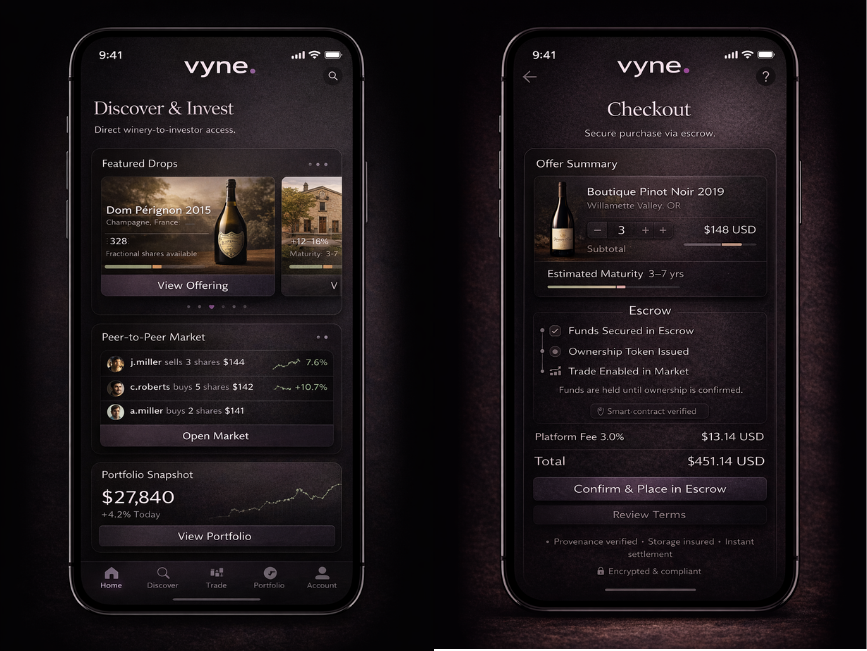
Transactions are made in vynes — the platform’s internal currency, where 1 vyne = $1 USD. Investors deposit funds, convert to vynes, and buy tokens in wines of their choosing. Token price varies per bottle, so the same budget buys more or fewer ownership units depending on vintage, producer, and projected value.
The goal is to bridge two worlds — the craftsmanship and rarity of fine wine, and the transparency and efficiency of a modern investment platform.
HOW VYNE WORKS
Fractional ownership, tokenized
Each bottle is split into 100 tokens representing ownership of that specific wine. Investors can build diversified portfolios across regions, vintages, and producers without needing to purchase full bottles.
Internal currency — vynes
1 vyne = 1 USD. Investors deposit funds, receive vynes, and use them to purchase tokens. Separating the platform currency from the ownership units keeps the system flexible and scalable across wines at different price points.
Peer-to-peer marketplace
Investors can trade tokens with each other in real time while the wine continues aging in storage. This creates liquidity in a category that has historically required holding bottles for years before sale through brokers or auction houses.
Physical redemption
An investor who accumulates all 100 tokens tied to a bottle can redeem the units for the physical wine once it reaches maturity — preserving the collectible dimension alongside the investment one.
Early producer access
Partner wineries list wines while still aging, giving investors exposure earlier in the lifecycle and giving producers capital before traditional distribution and retail.
STRATEGY
The product work was paired with a full go-to-market plan: positioning, target audience, launch sequence, and a post-launch roadmap covering prediction markets, hedging, and incentives to retain cash in the platform.
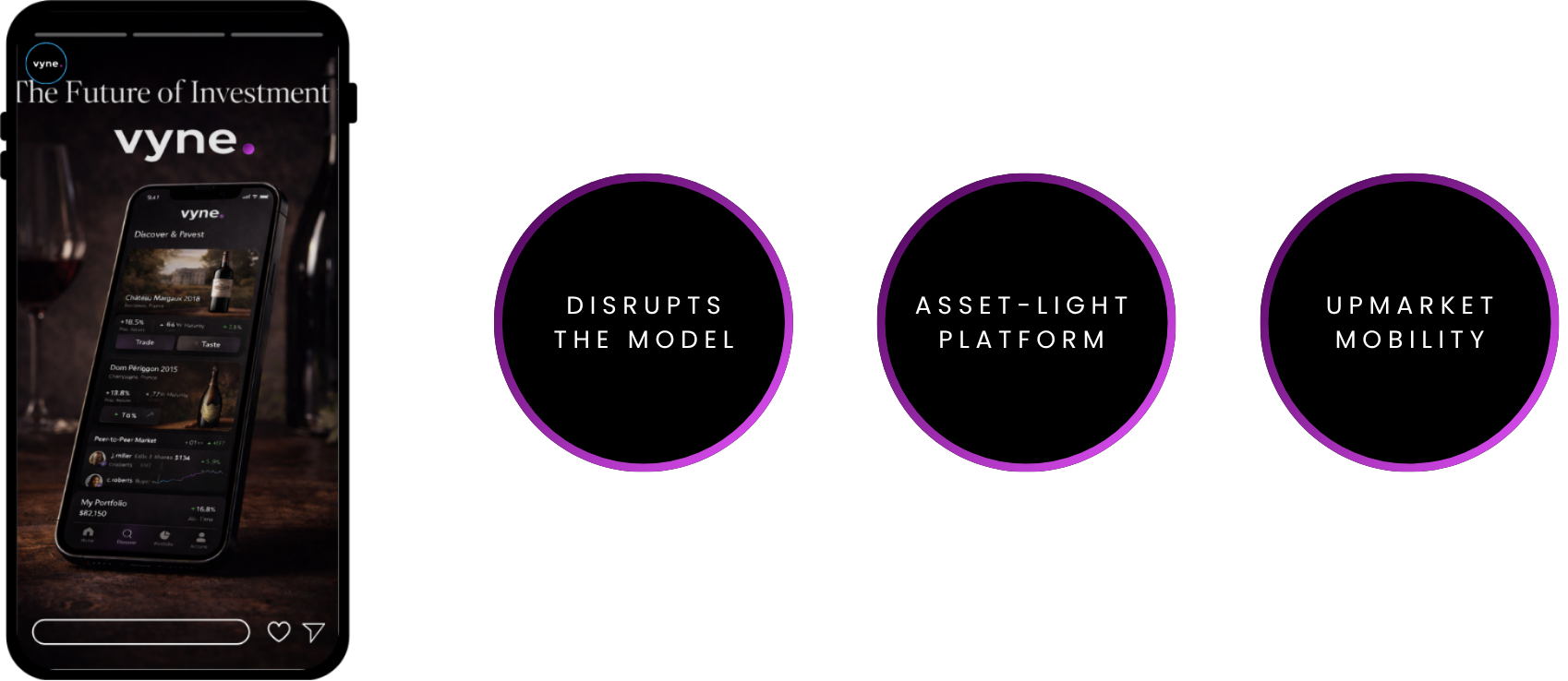
The strategic thesis: Vyne wins when the category treats it as a marketplace, not a fintech product. The brand leans on wine’s cultural codes — estates, vintages, provenance — rather than the vocabulary of trading apps.
- Market positioning and target audience definition
- Marketing strategy across launch and post-launch
- Future strategy: prediction markets, hedging instruments, incentives to retain cash
REFLECTION
Vyne worked as a concept because the product was designed in the shape of the category — tokens that age with the wine, a marketplace that respects provenance, a currency that lets investors move at the speed of interest rather than the speed of a broker.